
How to Choose the Right Bearing for Industrial Machinery
کرونا :
How to Choose the Right Bearing for Industrial Machinery
Selecting the right bearing for industrial machinery may seem like a small technical decision, but in reality it can determine how efficiently an entire machine operates. Bearings support rotating components, reduce friction, and maintain alignment between moving parts. When the correct bearing is used, machines operate smoothly, energy consumption remains stable, and maintenance intervals become longer. However, choosing the wrong bearing—even if it appears similar in size—can lead to vibration, overheating, excessive wear, and unexpected equipment failures.
If you are currently evaluating bearings for machinery, exploring reliable industrial options from Alma Bearings can help you compare designs, specifications, and performance characteristics before making a final decision.
Why Proper Bearing Selection Matters More Than Most People Expect
In complex machinery, many components interact simultaneously. Shafts rotate, gears transmit torque, motors generate motion, and loads constantly shift during operation. Bearings sit at the center of this mechanical activity.
Their role is deceptively simple: allow movement while carrying load. But achieving this balance requires precise engineering. Bearings must distribute forces evenly, maintain alignment, and minimize friction while operating under continuous motion.
When an incorrect bearing type is installed, several problems often appear gradually. Initially the machine may operate normally, but internal stress begins to build. Over time this leads to noise, vibration, lubrication breakdown, and eventually mechanical damage.
Understanding the Basic Role of Bearings in Machinery
Before selecting a bearing, it helps to understand what the component actually does inside a machine.
A bearing supports motion between moving parts by reducing friction. It allows rotating shafts or linear components to move smoothly while carrying loads that act in different directions.
In most industrial machines, bearings handle two primary types of load:
- Radial load, which acts perpendicular to the shaft
- Axial load, which acts parallel to the shaft
Some applications involve a combination of both. In addition, bearings must operate at specific rotational speeds while resisting environmental challenges such as heat, dust, moisture, and contamination.
The ideal bearing is one that can support these conditions reliably for a long period without excessive maintenance.
Types of Bearings Commonly Used in Industrial Machinery
Different machines require different bearing designs. While there are dozens of specialized variations, most industrial equipment relies on a few fundamental categories.
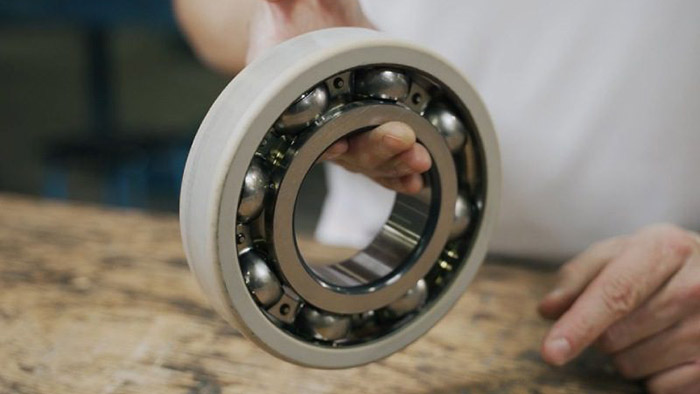
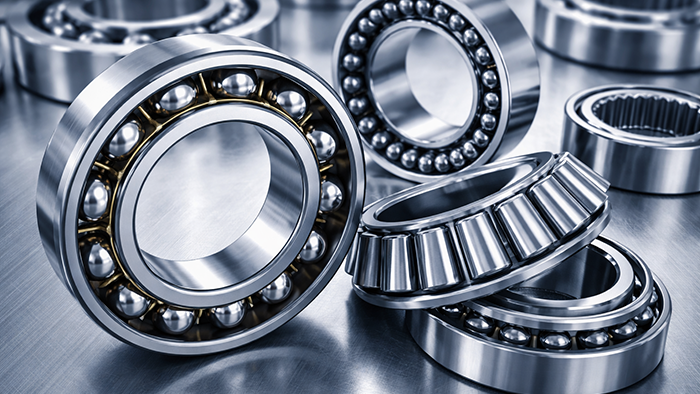
Ball bearings are among the most widely used due to their versatility and ability to operate at high speeds with relatively low friction. They are commonly found in electric motors, pumps, and light industrial equipment.
Roller bearings, on the other hand, are designed to handle heavier loads. Because their rolling elements have line contact with the raceways rather than point contact, they can support significantly higher radial forces. This makes them suitable for heavy machinery such as conveyors, gearboxes, and mining equipment.
Thrust bearings are specifically designed to support axial loads. They are often used in systems where forces act along the axis of rotation, such as automotive transmissions or vertical pump assemblies.
Linear bearings are used in machines where motion occurs along a straight path rather than rotational movement. They are common in automation equipment, CNC machines, and robotic systems.
Read More: Deep Groove Ball Bearings
Evaluating Load Requirements
One of the first steps in selecting a bearing is determining the type and magnitude of loads the component must support.
In many industrial machines, loads are not constant. They may fluctuate depending on operating cycles, acceleration, and external forces. Engineers typically analyze both static loads and dynamic loads when evaluating bearing requirements.
Radial loads occur when force is applied perpendicular to the shaft. This is common in belt‑driven systems, conveyor rollers, and rotating machinery.
Axial loads act along the shaft axis. These forces appear in applications such as screw conveyors, vertical pumps, and thrust mechanisms.
Some machines experience combined loads where radial and axial forces occur simultaneously. Bearings used in these applications must be designed to distribute forces across multiple contact points.
Considering Rotational Speed
Speed is another critical factor in bearing selection. Some machines operate at relatively low speeds but carry extremely heavy loads, while others rotate at thousands of revolutions per minute.
High‑speed applications require bearings that generate minimal friction and heat. Ball bearings are often preferred in such environments because their rolling elements produce less contact resistance.
Environmental Conditions and Operating Environment
Industrial machinery rarely operates in perfectly clean environments. Dust, moisture, chemicals, and temperature variations can all affect bearing performance.
In mining operations, for example, bearings must withstand heavy contamination from dust and debris. Specialized seals and protective designs are often necessary to prevent particles from entering the bearing assembly.
In food processing or chemical industries, corrosion resistance becomes a major consideration. Bearings may require stainless steel components or specialized coatings.
Temperature is another important factor. High‑temperature environments can reduce lubricant effectiveness and alter material properties. In such cases, bearings designed for thermal stability must be selected.
Choosing a bearing without considering environmental conditions often results in premature wear and frequent maintenance.
Selecting a bearing based on application requirements rather than price alone is essential for long‑term reliability. Explore the industrial bearing solutions available at Alma Bearings to compare designs built for demanding operating conditions.
Importance of Lubrication Compatibility
Lubrication plays a crucial role in bearing performance. Proper lubrication reduces friction, removes heat, and prevents direct metal‑to‑metal contact between rolling elements and raceways.
Two primary lubrication methods are commonly used in industrial bearings: grease lubrication and oil lubrication.
Grease lubrication is widely used because it is simple and requires less frequent maintenance. It also provides sealing benefits by preventing contaminants from entering the bearing.
Bearing Clearance and Internal Fit
Another important factor in bearing performance is internal clearance. This refers to the small amount of space between the rolling elements and the raceways before the bearing is installed.
Clearance affects how loads are distributed during operation. If clearance is too tight, friction and heat increase. If it is too loose, vibration and misalignment may occur.
Manufacturers offer different clearance classes to suit various applications. High‑temperature environments often require greater clearance to compensate for thermal expansion.
The Role of Supplier Expertise
Selecting the right bearing is not always straightforward, especially for complex machinery. Many engineers rely on experienced suppliers who can provide technical guidance and product recommendations.
A knowledgeable supplier can analyze machine requirements and suggest bearings that match load conditions, speed, lubrication systems, and environmental factors.
They can also help verify product authenticity and ensure that the bearings come from reliable manufacturers rather than counterfeit sources.
Working with specialized distributors such as Alma Bearings gives buyers access to a wide range of industrial bearings along with the technical support needed to select the most suitable solution.
Conclusion
Choosing the right bearing for industrial machinery requires careful evaluation of several factors, including load conditions, rotational speed, environmental exposure, lubrication methods, and installation requirements.
Although bearings are small components within larger machines, their impact on performance and reliability is enormous. A properly selected bearing can operate efficiently for thousands of hours, reducing maintenance needs and improving overall equipment productivity.
If you are evaluating bearings for industrial equipment, exploring the technical specifications and product range available at Alma Bearings can help you identify reliable solutions designed for demanding industrial applications.
Frequently Asked Questions
- What is the most important factor when choosing a bearing?
The most important factor is understanding the load conditions of the application, including whether the bearing must support radial loads, axial loads, or a combination of both.
- Can the wrong bearing type damage machinery?
Yes. An incorrectly selected bearing can create excessive friction, vibration, and heat, which may damage surrounding components and reduce machine lifespan.
- How does speed affect bearing selection?
High‑speed applications require bearings with low friction and precise manufacturing tolerances to prevent overheating and vibration.
نویسنده:
برچسب ها :Alma Bearings ، Ball Bearings ، Deep Groove Ball Bearings ، Linear Bearings ، Roller Bearings ، Thrust Bearings ، Types of Bearings
- نظرات ارسال شده توسط شما، پس از تایید توسط مدیران سایت منتشر خواهد شد.
- نظراتی که حاوی تهمت یا افترا باشد منتشر نخواهد شد.
- نظراتی که به غیر از زبان فارسی یا غیر مرتبط با خبر باشد منتشر نخواهد شد.
ارسال نظر شما
مجموع نظرات : 0 در انتظار بررسی : 0 انتشار یافته : 0