
What Are Bearings? Types of Bearings and Their Industrial Applications
کرونا :
What Are Bearings? Types of Bearings and Their Industrial Applications
Every machine that rotates, moves, or transfers motion relies on one small but extremely important component: the bearing. From electric motors and pumps to automotive systems and heavy industrial equipment, bearings make movement possible by reducing friction and supporting loads. Without them, machines would overheat, wear out quickly, and consume far more energy than necessary.
If you are currently selecting bearings for industrial use or planning to upgrade machinery components, exploring reliable solutions from professional suppliers like Alma Bearings can help ensure long‑term performance and dependable operation.
What Is a Bearing?
A bearing is a mechanical component designed to reduce friction between moving parts while supporting loads. In most cases, it allows a rotating shaft to move smoothly inside a housing while carrying radial loads (perpendicular to the shaft), axial loads (parallel to the shaft), or a combination of both.
At its core, a bearing performs three essential functions:
- Reduces friction
- Supports load
- Guides motion
By minimizing direct contact between surfaces, bearings prevent excessive wear and reduce heat generation. This improves energy efficiency and extends equipment lifespan.
Modern industrial bearings are designed with precision materials, optimized geometries, and advanced lubrication systems to meet increasingly demanding operating conditions in 2026 and beyond.
Why Bearings Are Critical in Industrial Machinery
In industrial environments, machines often operate continuously for long hours under heavy loads. Without proper bearings, rotating components would quickly fail due to friction and stress.
Bearings help:
- Improve energy efficiency
- Reduce maintenance costs
- Increase operational reliability
- Minimize downtime
- Enhance machine precision
For example, in an electric motor, bearings allow the rotor to spin smoothly at high speeds. In a conveyor system, they support heavy rotating rollers. In automotive systems, they ensure stable and efficient wheel rotation.
Even small improvements in bearing performance can significantly impact the overall efficiency of industrial operations.
How Bearings Work
The fundamental principle behind bearings is simple: replace sliding friction with rolling friction.
When two flat surfaces slide against each other, friction is high. However, when rolling elements such as balls or rollers are placed between those surfaces, resistance decreases dramatically.
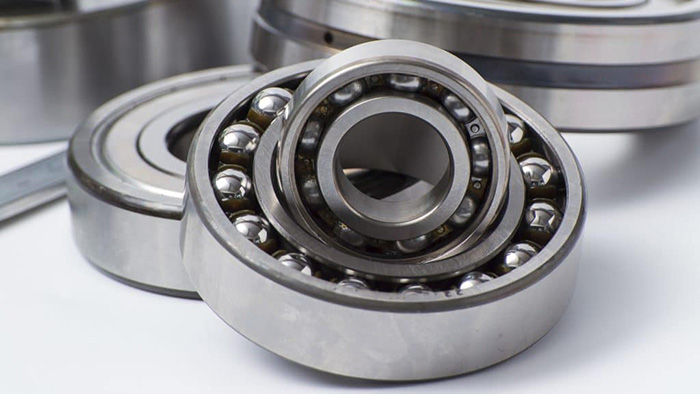
Most rolling bearings consist of:
- An inner ring
- An outer ring
- Rolling elements (balls or rollers)
- A cage to separate the rolling elements
As the shaft rotates, the rolling elements move between the rings, reducing friction and distributing loads.
Lubrication plays a crucial role in this process. A proper lubrication film prevents metal‑to‑metal contact, reduces wear, and helps dissipate heat.
Main Types of Bearings
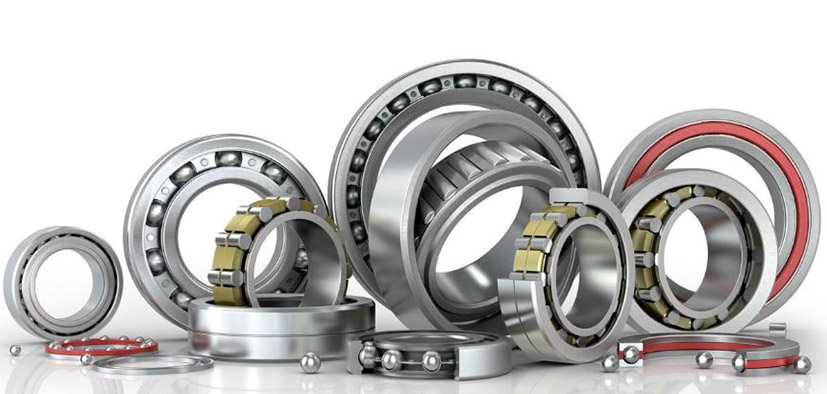
There are many bearing designs available today, but industrial applications typically use several major categories. Each type is designed to handle specific load conditions and operating requirements.
Ball Bearings
Ball bearings use spherical rolling elements. Because of their point contact design, they produce very low friction and can operate at high speeds.
They are widely used in electric motors, household appliances, automotive components, and precision equipment.
Ball bearings are known for their versatility, as many designs can support both radial and axial loads.
Roller Bearings
Roller bearings use cylindrical or tapered rolling elements. Instead of point contact, they create line contact with the raceways, allowing them to support heavier loads.
These bearings are commonly used in heavy industrial machinery such as gearboxes, conveyors, mining equipment, and construction machines.
Their ability to distribute loads over a larger surface area makes them suitable for demanding environments.
Thrust Bearings
Thrust bearings are specifically designed to support axial loads. They are commonly used in automotive transmissions, marine systems, and rotating tables where axial force is dominant.
Linear Bearings
Linear bearings allow smooth motion along a straight path instead of rotational movement. They are frequently used in automation systems, CNC machines, and precision manufacturing equipment.
Specialized Bearings
In modern industrial applications, advanced materials such as ceramics and hybrid designs are used to improve corrosion resistance, temperature tolerance, and high‑speed performance.
The choice of bearing type depends entirely on application requirements, load direction, speed, and environmental conditions.
If you are looking for reliable bearings for industrial machinery, exploring the product range at Alma Bearings can help you find solutions that match your performance and durability requirements.
Browse available bearing types and technical specifications to select components designed for long‑term industrial use.
Industrial Applications of Bearings
Bearings are used in almost every industrial sector. Their applications range from small devices to large heavy machinery.
Common industrial uses include:
- Electric motors and generators
- Pumps and compressors
- Gearboxes and transmissions
- Agricultural machinery
- Mining equipment
- Construction machinery
- HVAC systems
- Automotive assemblies
- Robotics and automation systems
In heavy industries such as mining or steel production, bearings must withstand extreme loads and harsh conditions. In contrast, precision industries like medical equipment require smooth, vibration‑free performance.
Factors to Consider When Choosing a Bearing
Selecting the correct bearing is not simply about choosing a size. Several technical factors must be evaluated.
Load Type and Magnitude
Determine whether the application involves radial load, axial load, or combined load. Also evaluate whether loads are constant or variable.
Rotational Speed
High‑speed applications typically require low‑friction designs. Speed ratings must match operational requirements.
Operating Environment
Temperature, moisture, dust, and chemical exposure significantly affect bearing performance.
Lubrication Method
Grease or oil lubrication must be selected based on speed, load, and maintenance schedule.
Alignment and Mounting
Misalignment can reduce bearing life dramatically. Proper installation is crucial for optimal performance.
Working with experienced bearing suppliers ensures that these factors are properly analyzed before purchasing.
Bearing Maintenance and Service Life
Even the highest quality bearings require proper maintenance to achieve long service life.
Common causes of bearing failure include:
- Inadequate lubrication
- Contamination
- Overloading
- Misalignment
- Improper installation
Regular inspection, proper lubrication schedules, and correct mounting techniques can significantly extend bearing lifespan.
Predictive maintenance technologies, such as vibration analysis and thermal monitoring, are increasingly used in modern industrial environments to detect early signs of bearing wear.
Economic Impact of Bearing Selection
Bearings may seem like small components, but their impact on operational cost is significant.
A low‑quality or improperly selected bearing can cause unexpected downtime, equipment damage, and costly repairs.
On the other hand, choosing the correct bearing type improves reliability, reduces maintenance frequency, and enhances energy efficiency.
In many industrial systems, investing in high‑quality bearings results in lower total cost of ownership over time.
Conclusion
Bearings are fundamental mechanical components that enable smooth, efficient, and reliable motion in industrial machinery. By reducing friction and supporting loads, they protect equipment from premature wear and improve operational performance.
Understanding what bearings are, how they function, and the different types available allows engineers and maintenance teams to make better decisions when selecting components for machinery.
From ball bearings used in high‑speed motors to roller bearings supporting heavy industrial loads, each type serves a specific purpose.
Careful selection, proper lubrication, and correct installation ensure long service life and consistent machine performance.
Choosing the right bearing can significantly improve machine efficiency and service life. Working with experienced bearing suppliers ensures you get components suited to your exact application.
Visit Alma Bearings to compare different bearing solutions and find the right option for your equipment.
Frequently Asked Questions
- What is the primary function of a bearing?
A bearing reduces friction between moving parts while supporting loads, allowing smooth and efficient motion.
- What are the main types of bearings used in industry?
The most common types include ball bearings, roller bearings, thrust bearings, and linear bearings, each designed for specific load and motion requirements.
- How do I know which bearing type to choose?
Selection depends on load direction, speed, operating environment, and lubrication method. Technical evaluation is essential for proper choice.
- What causes most bearing failures?
Common causes include poor lubrication, contamination, overloading, misalignment, and incorrect installation.
نویسنده:
برچسب ها :Ball Bearings ، Linear Bearings ، Roller Bearings ، Thrust Bearings ، What Is a Bearing
- نظرات ارسال شده توسط شما، پس از تایید توسط مدیران سایت منتشر خواهد شد.
- نظراتی که حاوی تهمت یا افترا باشد منتشر نخواهد شد.
- نظراتی که به غیر از زبان فارسی یا غیر مرتبط با خبر باشد منتشر نخواهد شد.
ارسال نظر شما
مجموع نظرات : 0 در انتظار بررسی : 0 انتشار یافته : 0